
Distributor vs. Wholesaler vs. Brand: What Amazon FBA Sellers Need to Know
-
Posted by
 Gautam Bisht
- On October 5, 2026
- 0 comments

Distributor vs. Wholesaler vs. Brand: What Amazon FBA Sellers Need to Know
If you’re just getting started sourcing branded products for Amazon FBA, one of the first things you’ll run into is the whole Distributor vs. Wholesaler vs. Brand question. In practice, Distributors, Wholesalers, and Brands often carry the same stuff and the titles get used interchangeably. But they don’t actually mean the same thing in the supply chain.
For FBA sellers, honestly, the title on the business card matters a lot less than the relationship behind it. What really counts is: Is this supplier legit? Is the product authentic? Can the brand confirm you’re actually buying through them? Do they even allow you to sell on Amazon? And do you have clean invoices to prove it all?
This guide explains Distributors vs. Wholesalers vs. Brands in plain terms, then covers how to verify a wholesale supplier for Amazon, invoices, ungating, and total cost.
Quick Comparison: Distributors vs. Wholesalers vs. Brands
| Factor | Distributors | Wholesalers | Brands |
|---|---|---|---|
| Main Role | Move and resell products from brands and manufacturers | Buy products in volume and sell to businesses | Own or manage the brand and product |
| Product Range | Often multiple products | Often multiple products | Its own products |
| Brand Relationship | Maybe Authorized | Maybe direct or through another supplier | Direct |
| Documentation | Distribution or wholesale invoices | Wholesale invoices | Brand invoices and documents |
| Typical Order Size | Often Larger | Varies | Varies |
| Amazon Consideration | Verify relationship and restrictions | Verify supplier and brand relationship | Brand and channel policy |
Supply Chain: From Manufacturer to Amazon Customer
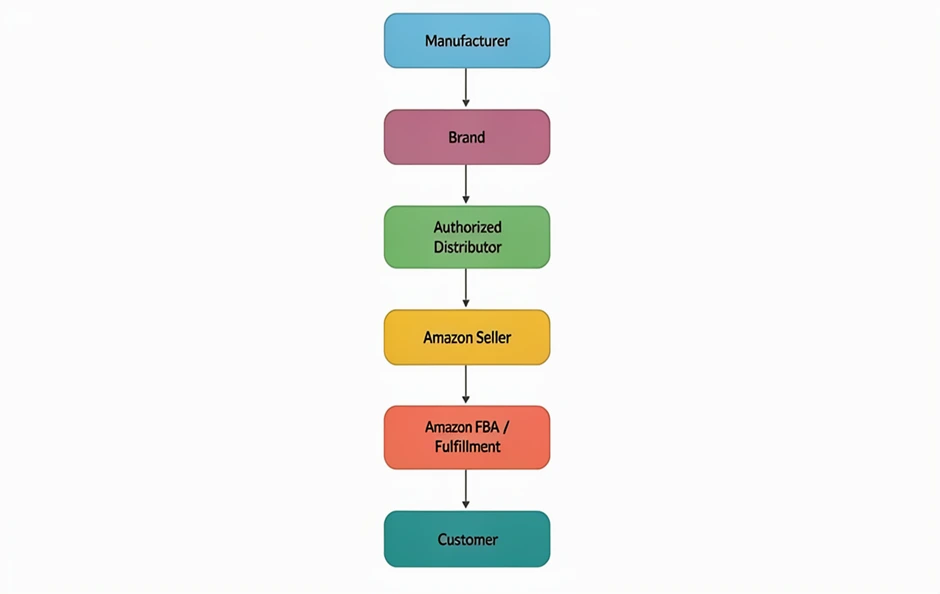
Not every product follows every step. A seller may buy directly from a brand, from an authorised distributor, or through another legitimate wholesale channel. Supply chains vary by product and brand.
What Is a Brand?
A brand is the company behind the product – the one that owns the name, the packaging, the whole identity. They might make the product themselves, or they might have someone else manufacture it for them.
Example: Sensodyne - you know the name, and you know what you're getting.
Getting a wholesale account directly with a brand is great because your supply chain is super clean. But that doesn’t mean you can automatically sell it everywhere. Before you place any order, you need to ask about their MOQs, pricing, what paperwork they provide, and – this is a big one – their marketplace policy. Some brands will straight up tell you that you need written permission to sell on Amazon.
What Is a Distributor?
A distributor is usually the middleman between the brand or manufacturer and the businesses that actually sell the product. They typically work with a bunch of different brands, buy in huge quantities, warehouse everything, and then supply retailers and other B2B customers.
Some of them are officially authorised by the brand. Some aren’t – they have a different kind of arrangement. “Wholesale distribution” is a really broad label, and it covers all kinds of companies.
Just because a website says “authorised distributor” doesn’t make it true. Amazon actually tells you to double-check any distributor or wholesaler with the brand itself. So, treat “authorised” as a claim you need to verify, not a fact. And that term “Amazon wholesale distributor”? It just means a distributor that happens to sell to Amazon sellers. If you Google “wholesale distributors USA,” you’ll get thousands of hits – which is exactly why verifying the brand relationship is way more important than the company name.
What Is a Wholesaler?
A wholesaler’s model is pretty simple: buy big volumes, resell to other businesses. Most carry multiple brands and will have an online catalogue or warehouse you can order from once you have an account. For FBA sellers, using an FBA wholesale supplier is often easier than trying to open direct accounts with every single manufacturer.
Amazon’s own advice on vetting wholesalers comes down to the same thing: check who they are, how they’re connected to the brand, how they handle shipping and logistics, and make sure you’re keeping your invoices. The quality between The quality of Amazon Wholesale suppliers varies widely, so you have to judge each one on their track record.
Distributor vs. Wholesaler - What's Actually Different?
The simplest way to think about it is their role. A distributor often has a direct, established relationship with the brand and handles a lot of the broader distribution work. A wholesaler is more focused on the buy-in-bulk-and-resell part.
But honestly, the industry doesn’t use these terms consistently. A lot of companies will call themselves both – Upsell Wholesale is a good example of that; they show up in both buckets. That’s why the whole wholesaler vs. distributor debate can feel so confusing.
If you’re sourcing for Amazon, don’t get hung up on what they call themselves. What matters is the real brand relationship, whether you have proper documentation, and whether you’re actually allowed to sell that product on Amazon.
Distributors vs. Wholesalers vs. Brands
| Consideration | Distributors | Wholesalers | Brands |
|---|---|---|---|
| Selection | Often broad | Often broad | Usually, narrower |
| Relationship | Often established | Varies | Direct |
| Documentation | Distribution or Wholesale Records | Wholesale records | Brand documents |
| Restrictions | Must verify | Must verify | Must verify |
| Supplier Verification | Important | Very important | Important |
Use this checklist to verify a wholesale supplier for Amazon
Legal business name, address and contact information
Amazon’s invoice guidance says supplier information should be present, product identifiers should be clear, invoices should document completed transactions, and documents you submit must be authentic and unaltered. Amazon may also verify supplier information.
What does Amazon Want for Wholesale Invoices and Paperwork?
How long does Amazon Ungating take?
It varies by category, brand, and the documents submitted, and Amazon controls the review, so no supplier can promise a timeline or an outcome. Check Amazon’s current rules, including any unit requirements, before you buy. Keep your invoices organised so they are ready to submit.
Category Examples: Grocery, Beauty and Electronics
Sourcing looks different by category. Grocery Wholesalers suppliers for Amazon FBA often work in high-volume, fast-moving products, and large grocery distributors are a common part of that market. Sellers often search for KeHE for Amazon sellers, UNFI wholesale for Amazon sellers or Nassau Candy wholesale for Amazon sellers, so verify each company’s role and terms yourself.
When you’re sourcing beauty products for Amazon, expect more brand restrictions and authenticity checks. With electronics, it’s usually tighter margins and Amazon wanting stricter paperwork. So, before you even start comparing prices, make sure the type of supplier you’re looking at actually fits the category you’re selling in.
Startup Questions Sellers Ask
How much money do you need to start Amazon FBA wholesale?
It depends on your category, the minimum order quantities and how much inventory you test at first.
Do you need a business license to buy wholesale for Amazon?
It depends on your state and on the supplier – some will ask for a reseller certificate before they even give you pricing. It’s worth double-checking with your state and your tax professional.
Don't Pick a Supplier Just Because They Have the Lowest Price
A cheaper unit cost doesn’t always mean you’re actually spending less. What you want to compare is your total landed cost.
True Product Cost= Product cost + Shipping + Prep + Marketplace fees + Storage + Other Operating Costs
| Cost | Supplier A | Supplier B |
|---|---|---|
| Product cost | $10.00 | $10.50 |
| Shipping | $1.50 | $0.75 |
| Prep | $0.75 | $0.50 |
| Other Cost | $0.50 | $0.25 |
| Estimated landed cost | $12.75 | $12.00 |
Common Wholesale Sourcing Mistakes
Which Supplier Should an Amazon Seller Consider?
| If your priority is… | You may consider… |
|---|---|
| A direct brand relationship | Brand |
| Access to multiple brands | Distributor or wholesaler |
| An established distribution network | Distributor |
| Long-term replenishment | A supplier with reliable inventory |
| Strong documentation | A supplier with verifiable sourcing records |
There’s no one-size-fits-all supplier for Amazon sellers. What works for you comes down to the brand, the product, the order size, any Amazon restrictions, and how you run your business. If you’re just starting, focus less on the “top 10” lists and more on the basics: can you verify them, do they actually offer support, and are their minimums realistic for you?
Frequently Asked Questions
Compared to other e-commerce business models, Amazon FBA wholesale provides distinct operational and risk-management advantages:
Not exactly. Both sell in bulk, but they sit in different spots in the supply chain and work differently.
Going direct gives you that direct line to the brand, which is great. But whether it makes sense depends on their pricing, minimums, policies, and whether they even allow you to sell on Amazon.
Yes, a lot of sellers do. Wholesale is a totally normal way to source for Amazon — just make sure you vet the supplier and keep your paperwork organised.
No. Just because someone calls themselves a distributor doesn't mean the brand actually authorised them. Always verify the relationship for the specific brand you want to sell.
Keep clean purchase invoices and anything that proves where the product came from. Amazon can ask for that during reviews.
Depends on the brand and category. Some require you to get approval first. Always check Amazon's current rules and the brand's own policy.
Conclusion
Brands, distributors, and wholesalers can all be legit parts of the supply chain — but they’re not the same thing. Don’t just go by the label. Ask where the product really came from, whether you can verify the supplier, whether the brand allows selling on Amazon, and whether your invoices will hold up if Amazon asks.
Explore Upsell Wholesale as an Amazon FBA Wholesale Supplier for branded wholesale sourcing, and review the Catalogue or Become a Customer pages to learn more about opening an account.
