
Best Amazon FBA Wholesale Suppliers in the USA (2026 Updated)
-
Posted by
 upsellecommerce
- On June 4, 2026

SPN CERTIFIED

Amazon officially vets SPN partners. We follow strict compliance protocols to ensure account protection, authentic inventory, and approved documentation.
Best Amazon FBA Wholesale Suppliers in the USA (2026 Updated)
Finding the right Amazon FBA wholesale suppliers in the USA can make or break your business in 2026. The wrong supplier leads to account suspensions, IP complaints, inauthentic item flags, and frozen funds. The right one gives you consistent inventory, legitimate invoices, Amazon-compliant documentation, and a pathway to long-term scalable growth.
In this updated guide, we rank the 10 best Amazon FBA wholesale suppliers and sourcing platforms available to US sellers in 2026. Whether you are launching your first Amazon store or scaling an existing FBA business, this list covers verified wholesale distributors USA sellers rely on, trusted Amazon wholesale sourcing strategies, and full-service support partners — with one clear #1 pick for sellers who need FBA inventory sourcing, ungating, and account protection all in one place.
Who This Guide Is For
This guide is written specifically for Amazon FBA sellers at any level looking for reliable US wholesale suppliers. Sellers dealing with Amazon suspensions, ungating challenges, or sourcing issues will find this guide especially useful. We compare features, beginner friendliness, compliance ratings, and what makes each supplier unique.
Quick Comparison: Top 10 Amazon FBA Wholesale Suppliers
| # | Supplier | Best For | Categories | Minimum Experience Level | Overall Rating |
|---|---|---|---|---|---|
| 1 | Kehe | Grocery & wellness | Organic foods, beverages, supplements | Intermediate | 4.8/5 |
| 2 | Upsell Wholesale | Amazon business growth | Multi-category sourcing & seller support | Beginner to Advanced | 4.9/5 |
| 3 | Cake Brands USA | Beauty & lifestyle | Beauty products | Beginner to Intermediate | 4.5/5 |
| 4 | Notion Marketing | Home & organization | Home, kitchen & specialty products | Intermediate | 4.6/5 |
| 5 | SN International | Product diversification | Consumer products | Intermediate | 4.4/5 |
| 6 | EE Distribu | Electronics & gaming | Electronics, collectibles & entertainment | Intermediate | 4.7/5 |
| 7 | Bilo Beauty | Beauty & skincare | Skincare & personal care | Beginner to Intermediate | 4.4/5 |
| 8 | UNFI | Grocery expansion | Grocery, wellness & household essentials | Advanced | 4.8/5 |
| 9 | Nassau Candy | Grocery & seasonal products | Candy, snacks & beverages | Beginner | 4.6/5 |
| 10 | Frontier Co-op | Sustainable products | Herbs, spices & wellness | Intermediate | 4.5/5 |
Now let us look at each supplier in detail — starting with the strongest pick for Amazon FBA sellers in 2026.
10 Best Suppliers Reviewed
1. KeHE - Why Amazon Sellers Choose KeHE
When people talk about wholesale distribution in the United States, KeHE is often one of the first names that comes up.
The company has built a strong reputation by helping retailers access products in fast-growing categories such as organic foods, beverages, healthy snacks, vitamins and wellness products.
For Amazon sellers, KeHE presents an opportunity to build a business around products consumers purchase regularly instead of chasing temporary trends.
One of the biggest mistakes sellers make is constantly switching categories every few months.
A sustainable Amazon business is usually built around products customers already buy every
week.
This is where KeHE excels.
The supplier offers stability and long-term opportunities.
However, new sellers should understand that KeHE is designed for businesses looking to grow
professionally. The onboarding process can take time and documentation requirements may be
more detailed than smaller distributors
Best for
- Grocery sellers
- Wellness brands
- Health-focused businesses
- Long-term Amazon growth
- Massive inventory selection
- Strong nationwide logistics network
- Trusted industry reputation
- Excellent growth opportunities
- Higher order requirements
- Lengthy approval process
2. Upsell Wholesale
Why Amazon Sellers Are Choosing Upsell Wholesale in 2026
Finding products is important, but building a successful Amazon business requires much more
than sourcing inventory.
As businesses grow, many sellers start juggling multiple service providers for sourcing, listing
optimization, account management and day-to-day operations. Over time, this process can become overwhelming and difficult to manage.
Upsell Wholesale takes a different approach by focusing specifically on Amazon sellers and their unique challenges.
Instead of acting solely as a wholesale supplier, the company works as a growth partner that
helps sellers simplify their operations while scaling their businesses.
What makes Upsell Wholesale stand out is its Amazon-first mindset. The team understands the challenges sellers face every day, from inventory management and listing optimization to maintaining account health and improving operational efficiency.
By bringing multiple solutions together under one platform, sellers can save time, reduce complexity and focus on growing their business rather than managing several vendors at once.
Whether you’re a new seller starting your Amazon journey or an established business looking to
streamline operations, Upsell Wholesale offers a more centralized and growth-oriented approach.
Best for
- Amazon-focused expertise
- Streamlined support system
- Growth-oriented approach
- Personalized business support
- Services may vary depending on business needs
- Best suited for Amazon-focused businesses
Get a Free Wholesale Sourcing Consultation
Visit upsellwholesale.com | Call (804) 876-0978 | Response within 24 hours | SPN Certified | 500+ Sellers Served
3. Cake Brands USA
Why Beauty Continues to Dominate Amazon
Beauty is one of Amazon’s fastest-growing categories and Cake Brands USA aligns well with this trend.
Modern consumers are increasingly focused on skincare, wellness, self-care and premium beauty
experiences.
This creates strong opportunities for Amazon sellers who understand customer behavior.
One advantage of beauty products is repeat purchasing behavior.
Unlike one-time purchases, beauty customers often return every few weeks or months to reorder products they trust.
That repeat customer potential makes beauty extremely attractive.
However, sellers should understand that beauty is highly competitive.
Winning in this space requires more than simply listing products.
Product presentation, customer reviews, branding and trust become essential components of
success.
Cake Brands USA gives sellers access to a category that continues to expand year after year.
Best for
- Beauty sellers
- Lifestyle brands
- Personal care businesses
- Strong market demand
- High repeat purchase potential
- Growing category
- Competitive marketplace
- Requires strong branding
4.Notion Marketing
Why Product Diversification Matters
Many Amazon sellers make the mistake of building their entire business around one category.
That approach creates risk.
If one category slows down, the entire business suffers. Notion Marketing helps sellers diversify.
The company offers products across household, kitchen, storage, organization and specialty
consumer categories. Consumers continuously purchase home products, making these categories relatively stable throughout the year.
One advantage of working with diversified suppliers is reducing dependence on one revenue stream. Instead of relying on one product category, sellers can build multiple streams of income inside their Amazon business.
Best for
- Home product sellers
- Kitchen brands
- Diversified businesses
- Broad product catalog
- Multiple category opportunities
- Stable consumer demand
- Some categories are highly competitive
- Research is still necessary
5. SN International
Why Multi-Category Suppliers Are Becoming More Important in 2026
One of the biggest risks Amazon sellers face is becoming dependent on a single category. Trends change quickly, customer demand fluctuates and competition increases every year.
This is why many experienced sellers eventually diversify their portfolios instead of relying on one niche.
SN International gives businesses the flexibility to explore multiple categories under one supplier relationship.
Instead of putting all their resources into one market, sellers can test different products, identify
profitable opportunities and gradually build a more resilient business.
Another advantage is risk reduction. If one category slows down, your business isn’t entirely dependent on a single revenue stream. This flexibility is becoming increasingly important in 2026 because Amazon itself continues to evolve.
Consumer preferences change rapidly and sellers who diversify often adapt faster. However, diversification doesn’t mean adding random products to your catalog.
Smart sellers use suppliers like SN International to strategically expand into categories that complement their existing business.
The goal isn’t to sell everything. The goal is to build a balanced product portfolio that can support long-term growth.
Best for
- Sellers wanting multiple product opportunities
- Businesses reducing dependency on one niche
- Growing Amazon stores
- Product diversification opportunities
- Flexible sourcing
- Expansion potential
- Risk reduction
- Requires active product research
- Product availability may vary
6. EE Distribution
Why Electronics and Collectibles Continue to Attract Amazon Sellers
The beauty industry has transformed significantly over the last few years.
Consumers no longer purchase beauty products solely based on advertisements. They research ingredients, compare products, read reviews, and become loyal to brands they trust.
This shift creates opportunities for Amazon sellers. Bilo Beauty focuses on skincare and personal care products that align with these modern purchasing behaviors.
One major advantage of beauty products is recurring demand.
Unlike furniture or electronics, customers frequently reorder skincare and personal care
products.
This repeat buying behavior creates long-term revenue opportunities.
However, beauty categories require attention to detail.
Customers expect high-quality experiences, clear product information, and trustworthy brands.
Sellers who invest in strong branding can perform exceptionally well in this category.
Best for
- Electronics sellers
- Gaming stores
- Collectibles businesses
- Strong market demand
- Recognized categories
- Frequently updated inventory
- High growth potential
- Trends change quickly
- May require ungating for some categories
- Competitive market
7. Bilo Beauty
Why Beauty and Personal Care Continue Growing Every Yea
The beauty industry has transformed significantly over the last few years.
Consumers no longer purchase beauty products solely based on advertisements. They research ingredients, compare products, read reviews, and become loyal to brands they trust.
This shift creates opportunities for Amazon sellers. Bilo Beauty focuses on skincare and personal care products that align with these modern purchasing behaviors.
One major advantage of beauty products is recurring demand. Unlike furniture or electronics, customers frequently reorder skincare and personal care products. This repeat buying behavior creates long-term revenue opportunities. However, beauty categories require attention to detail.
Customers expect high-quality experiences, clear product information, and trustworthy brands.
Sellers who invest in strong branding can perform exceptionally well in this category.
Best for
- Beauty businesses
- Personal care sellers
- Skincare-focused stores
- Repeat purchasing potential
- Strong customer demand
- Growing industry
- Intense competition
- Brand trust is essential
8. UNFI (United Natural Foods)
Why Large-Scale Sellers Trust UNFI
UNFI is one of the biggest wholesale distributors in North America. For Amazon sellers looking to scale aggressively, this supplier can unlock opportunities that smaller suppliers simply cannot provide.
Its extensive network covers grocery products, wellness products, supplements, and household
essentials. One major advantage is scalability. As your Amazon business grows, your inventory requirements also grow.
Smaller suppliers sometimes struggle to keep up with increasing demand.
UNFI, however, is built for large-scale operations. Many established Amazon sellers use suppliers like UNFI to build stable businesses around products consumers buy consistently.
However, this isn’t necessarily the easiest supplier for beginners.
The onboarding process can be strict, and purchasing commitments may be larger than what smaller businesses expect.
Still, for sellers looking to build a long-term operation, UNFI can become a valuable partner.
Best for
- Established Amazon businesses
- Grocery sellers
- Large-scale expansion
- Extensive product catalog
- Excellent logistics network
- Strong industry reputation
- Great scalability
- Strict onboarding process
- Higher purchasing commitments
9. Nassau Candy
Why Grocery Products Create Consistent Revenue
Many Amazon sellers underestimate grocery categories.Instead, they chase trends that may disappear after a few months. Nassau Candy offers something different. It focuses on products consumers purchase regularly.
Candy, snacks, beverages, and seasonal products naturally generate repeat demand. One major advantage is seasonality. Holidays create spikes in consumer spending that smart sellers can leverage.
Valentine’s Day, Halloween, Christmas, and other events create opportunities throughout the
year. However, grocery businesses require careful planning.
Inventory expiration dates and forecasting become extremely important. Businesses that
manage inventory effectively often perform very well in this category.
Best for
- Grocery businesses
- Seasonal sellers
- Repeat-purchase businesses
- Strong recurring demand
- Seasonal opportunities
- Large inventory selection
- Shelf-life management required
- Forecasting is essential
10. Frontier Co-op
Why Sustainable Products Are Becoming a Major Opportunity
Consumers today are more conscious about their purchasing decisions than ever before. Many customers actively search for sustainable, organic, and ethically sourced products.
Frontier Co-op has built its reputation around these values.
The supplier specializes in herbs, spices, teas, and wellness products. Health-conscious consumers continue growing every year, making these categories increasingly attractive for Amazon sellers.
Another advantage is customer loyalty. Consumers who prioritize organic products often become repeat buyers. This can help sellers build stable businesses over time. Although the niche is smaller compared to broader categories, the customer base tends to be highly engaged.
Best for
- Organic brands
- Wellness sellers
- Sustainable businesses
- Strong organic positioning
- Trusted reputation
- Loyal customer base
- Growing demand
- Niche-focused inventory
- Smaller catalog compared to larger distributors
💡Expert Insight
Direct manufacturer sourcing can dramatically improve margins — but it comes with added complexity around shipping, customs, quality control, and compliance documentation. Sellers new to international sourcing should start with smaller test orders and work with a freight forwarder experienced in FBA shipments.
How Wholesale Suppliers Help with Amazon Ungating
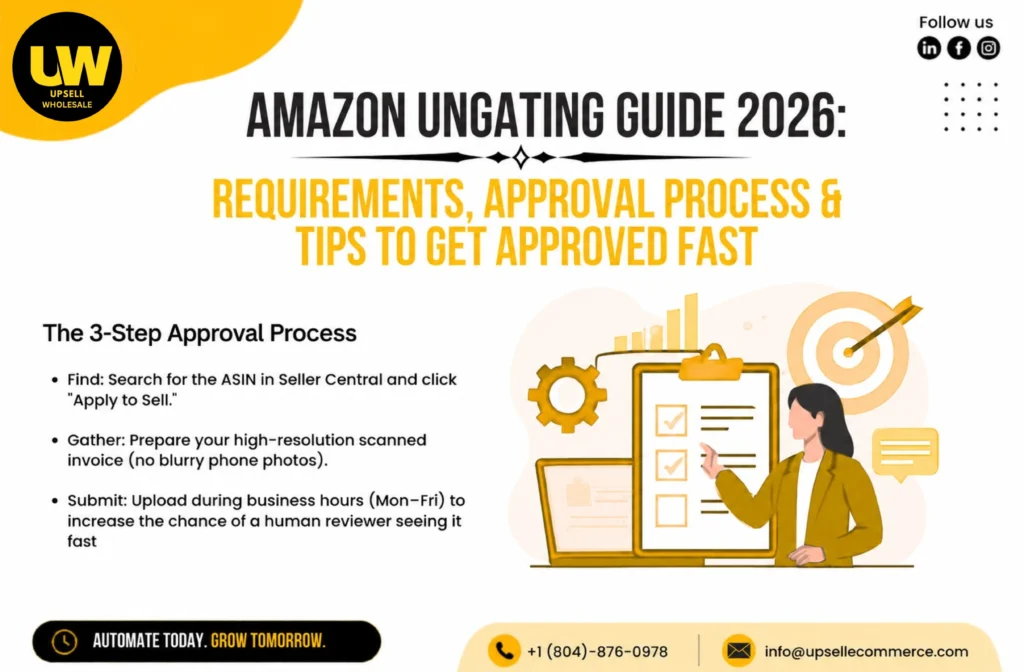
Amazon restricts certain categories and brands, requiring sellers to obtain approval before listing products. This process — commonly known as ungating — requires specific documentation that only legitimate wholesale suppliers can provide. Getting ungated in profitable categories like Grocery, Beauty, Toys, Health, and Automotive can dramatically expand your selling opportunities on Amazon.
Reliable wholesale suppliers — particularly SPN-certified partners like Upsell Wholesale — help sellers obtain all the documentation Amazon requires:
- Authentic commercial invoices showing a genuine purchase from an authorized distributor
- Brand authorization letters (LOAs) confirming permission to resell
- Product verification documents demonstrating authenticity
- Compliance paperwork meeting Amazon’s specific formatting requirements
- Proof of supply chain legitimacy to satisfy Amazon’s review process
The quality of your ungating documentation directly determines whether Amazon approves your application or rejects it. Suppliers who provide properly formatted, compliant invoices and LOAs make the approval process significantly faster and more reliable.
💡Need Ungating Support?
Upsell Wholesale has helped 500+ Amazon sellers get approved in restricted categories including Grocery, Beauty, Toys, Health, and Automotive. Our SPN-certified team provides compliant invoices and handles all documentation. Visit upsellwholesale.com or call (804) 876-0978 for a free ungating consultation.
Common Sourcing Mistakes Amazon Sellers Must Avoid
Choosing the wrong wholesale supplier — or making avoidable sourcing mistakes — is one of the fastest ways to get your Amazon account suspended. Here are the five most common mistakes FBA sellers make and how to avoid each one:
Buying Inventory Without Proper Research
Purchasing products without verifying demand, competition, and profitability leads to slow-moving inventory, storage fees, and capital being locked in unsellable stock. Always use sales rank data, price history tools like Keepa, and competitive analysis before committing to a bulk order.
Using Unverified or Unauthorized Suppliers
Sourcing from unauthorized distributors is one of the most common triggers for inauthentic item complaints and account suspensions. Amazon wholesale sourcing must start with verified, authorized distributors. Amazon requires proof that your products came from an authorized supply chain. Always verify supplier credentials, business registration, and brand authorization status before placing orders.
Ignoring the Full Cost of FBA
Wholesale price alone does not determine profitability. FBA fees, storage fees, referral fees, advertising costs, and return rates all affect your actual margin. Use Amazon's FBA revenue calculator to assess true profitability before ordering -- and factor in seasonal storage surcharges if you are purchasing ahead of peak periods.
Overstocking Slow-Moving Products
Overstocking ties up working capital and generates significant long-term storage fees. Start with smaller test orders to validate demand before scaling. Replenishable, consistently-selling products are a safer foundation than one-time seasonal buys at scale.
Ignoring Brand Restrictions Before Purchasing
Amazon restricts selling rights for many brands, and purchasing inventory for a restricted brand before confirming your permission to resell is a costly mistake. Always check brand restrictions in Seller Central before purchasing, and obtain formal brand approval or an LOA from the brand or authorized distributor if required.
How to Choose the Right Amazon FBA Wholesale Supplier
Not all wholesale suppliers are the same. The cheapest option is rarely the best one — reliability, documentation quality, and supplier accountability matter far more to your long-term Amazon business than getting the lowest unit price. Here is what to evaluate when selecting a wholesale partner:
| Factor | What to Look For |
|---|---|
| Product Authenticity | Verify the supplier is an authorized distributor for the brands you want to sell. Request documentation proving authorization. |
| Invoice Quality | Invoices must include supplier name, address, product details, quantities, and pricing. Amazon requires compliant invoices for ungating and appeals. |
| Inventory Consistency | Reliable suppliers maintain stock levels. Ask about typical lead times, restock schedules, and how they handle out-of-stock situations. |
| Pricing Structure | Understand volume tiers, minimum order requirements, and any additional fees. Calculate your landed cost including shipping before ordering. |
| Minimum Order Requirements | Lower MOQs are better when testing new products. Scale up quantities only after validating demand. |
| Communication Speed | Fast, professional communication is a signal of supplier reliability. Test their responsiveness before placing large orders. |
| Brand Approval Support | Top suppliers help you obtain LOAs and brand authorization documents -- critical for ungating and avoiding IP complaints. |
| Shipping Reliability | Confirm shipping timelines, carrier options, and whether FBA prep services are available. |
| Return Policies | Understand the supplier's return process before you need it. Clear return policies reduce risk on test orders. |
| Scalability | Choose suppliers that can grow with your business. A partner who can handle 10-unit test orders and 10,000-unit bulk orders is ideal. |
⚠️ Key Insight
The cheapest supplier is not always the best -- reliability and documentation quality matter more than unit price. One inauthentic item complaint from a bad supplier can cost you far more in lost revenue and reinstatement fees than you saved on the original purchase.
Amazon Wholesale Trends in 2026
The Amazon wholesale landscape has changed significantly in 2026. More brands are now gated, requiring seller approval before listing. Invoice scrutiny has increased — only compliant, itemized invoices from authorized distributors pass review. AI-powered account monitoring detects sourcing violations faster than ever, making clean supply chains essential. Sellers are moving toward verified, authorized distributor sourcing as grey-market channels carry growing compliance risk. Supply-chain documentation — invoices, LOAs, and purchase orders — is now the baseline standard for account protection and ungating success.
How to Verify a Wholesale Supplier Before Ordering
Sourcing from an unverified or unauthorized supplier is one of the most common — and most preventable — causes of Amazon account suspensions. Before placing any wholesale order, run through this six-step verification checklist. Each step takes only a few minutes and can save you thousands of dollars in lost inventory, frozen funds, and reinstatement costs.
Verify EIN and Business Registration
Confirm the supplier has a valid Employer Identification Number (EIN) and is registered as a legitimate business entity. You can verify business registration through your state’s Secretary of State website or via the IRS EIN lookup tool. Any legitimate distributor should be able to provide their EIN without hesitation. If a supplier is unwilling or unable to provide this information, treat it as a significant red flag.
Request an Invoice Sample
Before placing a bulk order, request a sample invoice to verify it meets Amazon’s documentation standards. A compliant invoice must include the supplier’s full business name, address, and contact details, itemized product descriptions with quantities and unit pricing, a clear purchase date, and ideally the supplier’s EIN. Amazon has specific formatting requirements for invoices used in ungating applications and account appeals -- submitting a non-compliant invoice is one of the most common reasons ungating requests are rejected. Review the sample invoice carefully and compare it against Amazon’s stated documentation requirements before committing to a wholesale relationship.
Confirm Brand Authorization
Verify that the supplier is an authorized distributor for any branded products you intend to purchase. This means the supplier has a formal relationship with the brand or manufacturer, allowing them to legally resell the products and provide a Letter of Authorization (LOA) on request. Buying branded products from unauthorized resellers -- even at attractive prices -- puts your Amazon account at risk of IP complaints and inauthentic item flags. Always ask for a written confirmation of the supplier’s authorization status for the specific brands in your order before completing a purchase.
Check the Better Business Bureau Profile
Search for the supplier on the Better Business Bureau (BBB) website at bbb.org. A BBB-accredited business with a strong rating and minimal unresolved complaints is a positive signal of legitimacy. Pay close attention to the nature of any complaints filed -- recurring issues around product authenticity, billing disputes, or unfulfilled orders are significant warning signs. A supplier with no BBB presence is not automatically disqualified, but one with multiple unresolved complaints or a poor rating warrants serious additional scrutiny before you place an order.
Place a Small Test Order First
Before committing to a large wholesale order, always place a small test order first. This serves several purposes: it confirms the supplier can deliver on their promises, allows you to inspect product quality and condition, validates that the invoice and packaging meet Amazon’s requirements, and reveals any fulfillment issues on a small scale before you have significant capital at risk. A reliable supplier will have no objection to fulfilling a test order. Any supplier who pressures you to skip the test order and jump straight to a large commitment should be treated with caution.
Verify Amazon Accepts the Documentation
Even after completing Steps 1 through 5, confirm that Amazon will accept the supplier’s documentation format before scaling your orders. Amazon has specific requirements for invoices used in ungating applications, account appeals, and brand authorization requests. If you are unsure whether your supplier’s invoice format meets Amazon’s standards, consult with an SPN-certified partner like Upsell Wholesale before submitting. Submitting non-compliant documentation can trigger additional review, extend ungating timelines, and in some cases result in account flags that are difficult to resolve after the fact. Prevention is always faster and less expensive than correction.
Real Seller Results: Amazon FBA Case Studies
The strategies and supplier recommendations in this guide are not theoretical. Here are two real seller journeys from early 2026 that demonstrate what is achievable when the right wholesale foundation, consistent investment, and professional support are combined.
Case Study 1: Michael-- Zero to $16,956/Month in 5 Months
Seller: Michael
Location: Torry Road, USA
Partner: Upsell Ecommerce
Timeline: January 2026 – May 2026
Michael launched an Amazon FBA business from scratch with zero prior selling experience. Starting with no sales infrastructure, the Upsell Ecommerce team built a website, vetted and connected Michael with authorized distributors, drafted a Plan of Action (POA), and launched product listings. The first shipment went live in January with no immediate sales — a normal outcome for new accounts building algorithmic visibility.
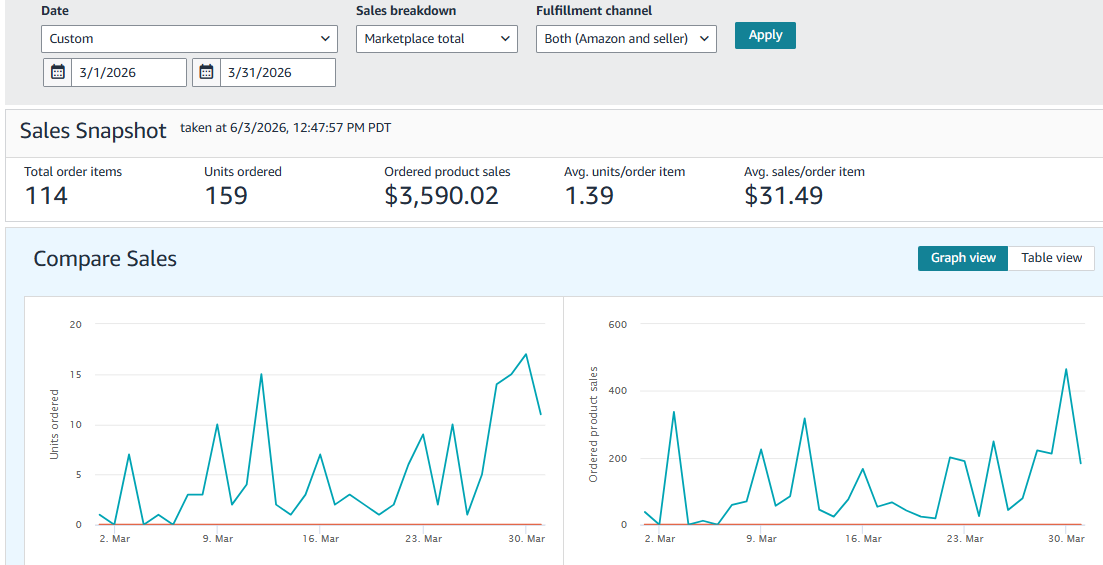
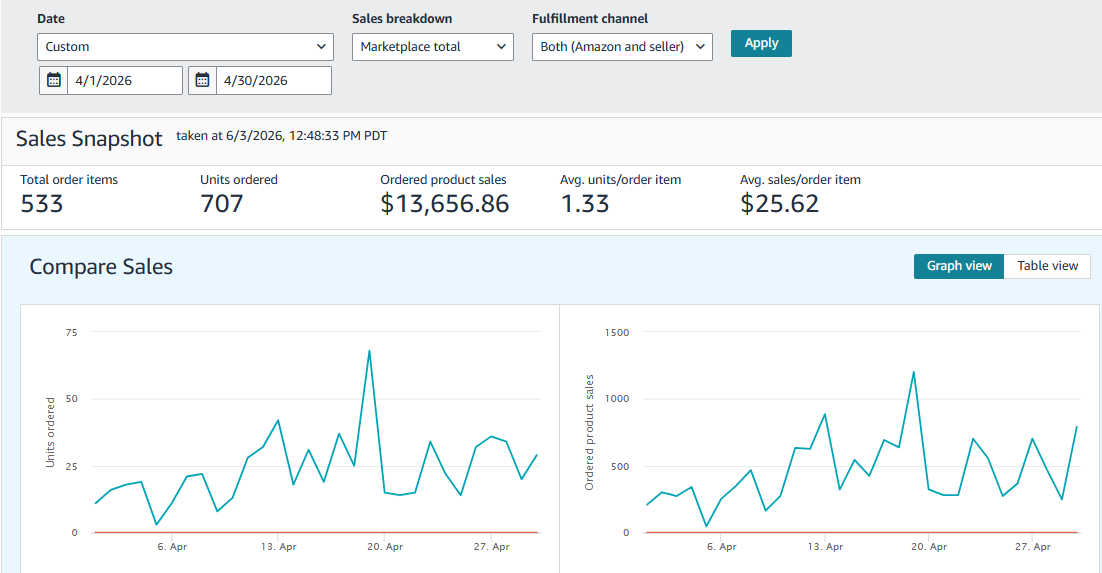
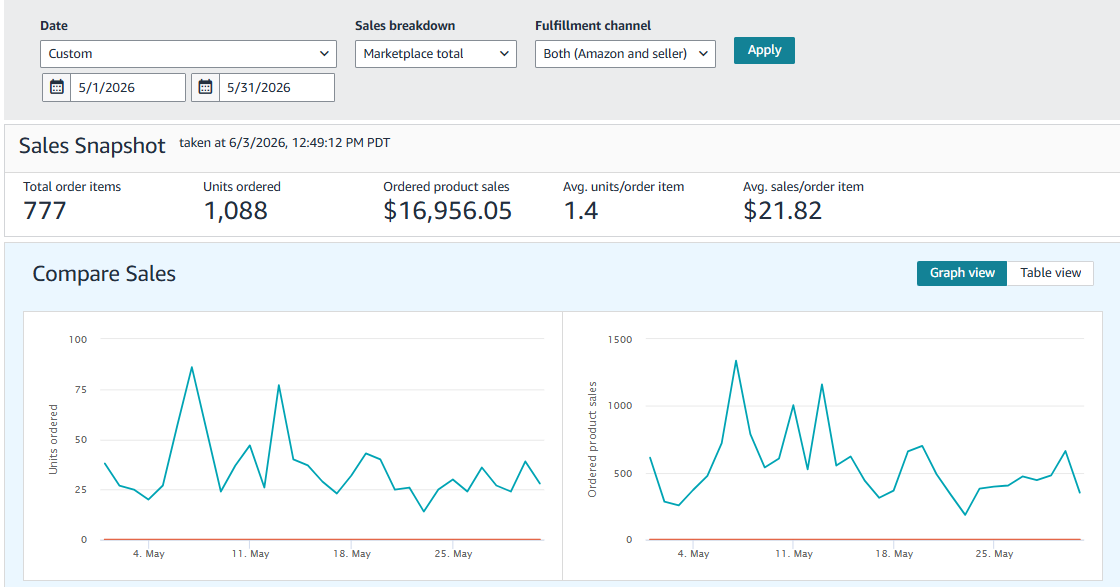
“Michael’s case proves that consistent monthly investment, paired with professional ecommerce support, can take a brand-new Amazon account from zero to a profitable, scaling operation in under 5 months.”
Key Results: 1,088 units sold in Month 5 • $16,956 monthly product sales • $34,203 total sales from $7,500 invested • ROI grew from 0% to 20%+ over 5 months
Case Study 2: Taylor Peterson -- First Profit in Under 5 Months
Seller: Taylor Peterson
Location: Michigan, USA
Partner: Air Conditioner Parts & Measurement Tools
Timeline: January 2026 – June 2026
Taylor Peterson created a new Seller account with no prior sales history, reviews, or existing products. From January through April, Taylor focused on product research and category approval, identifying two high-demand, lower-competition niches: air conditioner parts and a precision measurement tool.
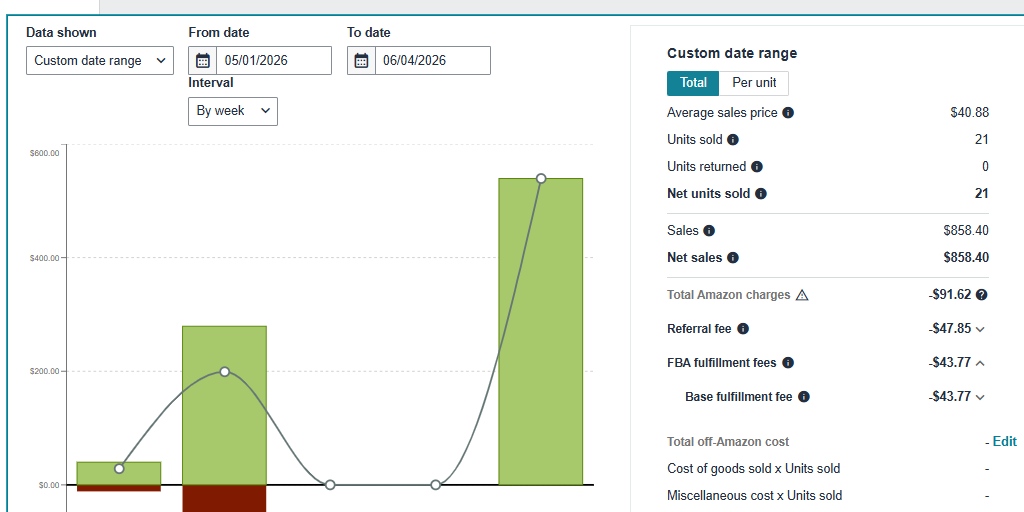
“Starting a brand-new Amazon account with zero history and reaching first profit within a single sales cycle — in under five months — shows what focused niche selection and FBA leverage can genuinely achieve.”
Key Results: 21 units sold in first sales cycle • $858.40 net sales • ROI grew to 20% • 0 returns • Profitable in under 4.5 months from account creation
Frequently Asked Questions
An Amazon FBA wholesale supplier is a business that sells products in bulk at discounted rates to Amazon sellers, who then resell those products through Amazon's Fulfillment by Amazon (FBA) program. The supplier ships inventory to the seller or directly to Amazon's fulfillment centers, and Amazon handles storage, shipping, and customer service. The seller earns profit on the difference between the wholesale cost and the retail selling price on Amazon.
You can find legitimate wholesale suppliers through verified directories like SaleHoo and Worldwide Brands, manufacturer websites, B2B marketplaces, trade shows, and full-service sourcing partners like Upsell Wholesale. The most reliable wholesale products for Amazon FBA come from authorized distributors for Amazon sellers who can provide compliant invoices and brand authorization. Always verify business registration, request compliant invoices, and start with small test orders. Avoid Amazon reseller suppliers who cannot provide formal brand authorization or who offer prices significantly below market rate.
Most authorized wholesale suppliers require a reseller certificate or business registration before they will open an account with you. This is standard practice and also helps establish the legitimacy of your supply chain -- which matters when Amazon reviews your documentation during ungating or an account appeal.
Upsell Wholesale, SaleHoo, Faire, and DollarDays are all beginner-friendly options. For beginners who also want account support, ungating guidance, and protection against suspension, Upsell Wholesale is the strongest choice because it provides structured support alongside sourcing -- rather than just a product list.
Amazon ungating is the approval process required to sell in restricted product categories or brands on Amazon. Examples include Grocery, Beauty, Toys, Health, and Automotive. Reliable wholesale suppliers help by providing the compliant invoices, brand authorization letters, and product documentation that Amazon requires to approve your application. SPN-certified partners like Upsell Wholesale specialize in preparing ungating documentation that meets Amazon’s exact requirements. For a complete walkthrough, see the Amazon Ungating Guide from the Upsell Wholesale team.
For ungating and account protection, Amazon typically requires a commercial invoice showing the supplier's name, address, and contact details, the products purchased with descriptions and quantities, pricing information, and the purchase date. For brand approvals, you may also need a Letter of Authorization (LOA) from the brand or authorized distributor. Upsell Wholesale provides all required documentation as part of its ungating and sourcing support service.
Yes. Amazon account reinstatement is one of Upsell Wholesale’s core services. The team has helped more than 500 US Amazon sellers get reinstated across all suspension types -- including Section 3 code of conduct violations, IP complaints, inauthentic item allegations, and related account suspensions. With a 95%+ reinstatement success rate, Upsell Wholesale is one of the most effective reinstatement partners available. For detailed guidance, see the Amazon Account Reinstatement Guide. Submit a free case review at upsellwholesale.com or call (804) 876-0978.
→ Book a Free Case Review — Connect with the Upsell Wholesale Team
Startup costs vary depending on the supplier and the products you choose. Some sellers start with as little as a few hundred dollars for test orders, while established wholesale programs typically involve investments of several thousand dollars to build sufficient inventory depth. The key is to start small, validate demand, and scale up as you confirm profitability. Upsell Wholesale can guide you through the investment planning process as part of its wholesale growth consulting service.
A manufacturer makes the product. A distributor buys directly from the manufacturer in large quantities and resells to retailers and resellers. A wholesale supplier may be a distributor, a wholesaler who buys from multiple distributors, or a sourcing partner who connects sellers with the right distributor for their needs. For Amazon FBA, authorized distributors are the most important suppliers because their invoices and LOAs are recognized by Amazon as legitimate proof of supply chain authenticity.
Amazon's ungating review typically takes between 24 hours and 7 business days depending on the category and the quality of the documentation submitted. Having a compliant invoice and correct supporting documentation significantly speeds up the process. Upsell Wholesale has helped sellers get ungated within 24 to 48 hours in many cases by ensuring that all documentation meets Amazon's exact requirements before submission.
Ready to Build a Profitable Amazon FBA Wholesale Business in 2026?
Choosing the right wholesale supplier is one of the most important decisions you will make as an Amazon FBA seller. Strong supplier relationships protect your account, ensure authentic inventory, and give you the documentation you need to ungate restricted categories and defend against account challenges.
Whether you are launching your first Amazon store or recovering from a suspension, Upsell Wholesale is the only partner on this list that combines wholesale sourcing, Amazon ungating support, and account reinstatement under one roof — backed by SPN certification and a 95%+ success rate across 500+ sellers.
Author
Upsell Ecommerce
Ready to Build a Profitable Amazon FBA Wholesale Business in 2026?
Choosing the right wholesale supplier is one of the most important decisions you will make. Strong supplier relationships protect your account, ensure authentic inventory, and give you the documentation you need to ungate restricted categories and defend against account challenges.
