
10 Most Profitable Wholesale Categories for Amazon FBA Sellers in the US (2026 Ranking)
-
Posted by
 Gautam Bisht
- On November 5, 2026
- 2 comments

The best wholesale categories for Amazon FBA sellers in the US combine consistent demand, steady restock cycles, healthy post-fee profit, and manageable competition.
Recent wholesale research shows Sports & Outdoors, Tools & Home Improvement, and Beauty & Personal Care offer the most promising profit potential. Home & Kitchen remains the most dependable starting point for sellers who value steady demand and simple handling.
Finding the best wholesale products to sell on amazon is about balancing high sales velocity with predictable restock cycles, healthy post-fee profit, and manageable Buy Box competition. If you are researching where to buy wholesale products to sell on amazon and how to select the best products to wholesale on amazon, no single category fits every seller. Profitability depends on your supplier discount, Amazon’s fulfillment fees, your account’s approval status, and how many competing sellers share Buy Box rotations.
If you are brand new to wholesale, begin with How Does Amazon FBA Wholesale Work? or follow our comprehensive step-by-step roadmap in How to Start Amazon FBA Wholesale in 2026.
How We Evaluate a Wholesale Category
Each category below is assessed on five criteria:
1
Repeat Demand
Do customers reorder predictably, or is it purely a one-time purchase?
2
Competition
How many sellers share the Buy Box, and how stable is the historical price?
3
Is there enough profit after product cost, referral fee, FBA fees, and shipping?
4
Can you source the product and reorder replenishment units reliably?
5
How heavily do seasonality, expiry dates, returns, restrictions, and handling affect profit?
Essential Step: Always check Amazon’s current fees and category restrictions before buying inventory.
The 2026 Ranking: Best Wholesale Products & Categories to Sell on Amazon
This ranking draws on Seller Assistant’s The State of Amazon Wholesale. The ROI-threshold and margin figures come from sampled listings and supplier lines, not from all US Amazon sales. Only some categories have directly comparable data; the rest are placed by editorial judgment, and the table says which is which.
| Rank | Category | Profit Potential | Evidence | Why It Ranks Here |
|---|---|---|---|---|
| 1 | Sports & Outdoors | Very High | Data: 31.9% of products met the 20% ROI threshold | Highest share of analyzed products clearing the threshold. Watch seasonality and product-level competition. |
| 2 | Tools & Home Improvement | Very High | Data: 30.1% met the threshold | Strong ROI potential, but profitable opportunities were less abundant per supplier line. |
| 3 | Beauty & Personal Care | Very High | Data: 27.3% met the threshold | Highest opportunity-lead rate among the six categories with comparable data. Manage authenticity, expiry dates, and restrictions carefully. |
| 4 | Home & Kitchen | High | Data: 147 products per 1,000 matched supplier lines met the threshold (measured differently, so not directly comparable with the percentages above) | Above the overall comparison of 133 per 1,000. Placed here on that comparison plus low handling difficulty. Screen sales velocity and product dimensions. |
| 5 | Toys & Games | Moderate | Data: 24.0% met the threshold | Strong Q4 demand, but seasonality and brand restrictions make results less consistent. |
| 6 | Health & Household | Moderate | Editorial: no comparable figure | Repeat sales on everyday essentials. Bulky items, hazmat rules, and price competition can erode profit. |
| 7 | Pet Supplies | Moderate, Margin-Sensitive | Data: 22.9% met the threshold; median margin -8.0% | Reliable repeat purchases and many compact items, but the sample’s median margin was negative, so only products with verified per-unit profit make sense. |
| 8 | Grocery & Gourmet Food | Low–Moderate | Data: median margin -3.7% | Strong repeat demand, but demand alone doesn’t ensure profit. Expiry and approval requirements add risk. |
| 9 | Baby Products | Selective | Editorial: no comparable figure | Stable demand, but safety, eligibility, documentation, and packaging requirements add complexity. |
| 10 | Office Products | Selective | Data: lowest opportunity-lead rate in the research | Easy to handle, but price competition is intense, and Amazon itself often sells the item. |
This is a ranking of wholesale profit opportunities, not a guarantee of actual category profits. Amazon doesn’t publish a reliable universal profit ranking. “Opportunity-lead rate” refers to the share of analyzed leads that the research classed as viable opportunities.
Editorial Note on Pet Supplies & Grocery Margins: Why do Pet Supplies (-8.0%) and Grocery (-3.7%) show negative median margins in the research sample while still ranking in the top 10? Heavy commodity lines—such as 40 lb bags of dry pet food or bulk canned pantry goods—suffer intense price competition, thin wholesale margins, and high weight-based fulfillment fees that pull the overall category median negative. However, high-margin, compact niches (e.g., specialized grooming tools, pet accessories, artisan tea packs, and gourmet spice sets) remain exceptionally lucrative if you screen strictly for landed ROI.
Category Quick Comparison
These ratings are general editorial guidelines, not guaranteed market results.
| Category | Repeat Purchase | Seasonality | Handling Difficulty | Sourcing Complexity | Beginner-Friendly |
|---|---|---|---|---|---|
| Sports & Outdoors | Medium | High | Medium | Medium | Moderate |
| Tools & Home Improvement | Low–Medium | Low | Large (weight, size) | Medium | Moderate |
| Beauty & Personal Care | High | Low | Medium (expiry) | High (authenticity, gating) | Moderate |
| Home & Kitchen | Medium | Low | Low | Low | Yes |
| Toys & Games | Low | Very High | Medium | Medium–High | Moderate |
| Health & Household | High | Low | Medium–High | High (restrictions) | Moderate |
| Pet Supplies | High | Low | Low | Low | Only with verified margins |
| Grocery & Gourmet | High | Medium | High (expiry) | High | No |
| Baby Products | Medium | Low | Medium | High | No |
| Office Products | Medium | Medium (back-to-school) | Low | Low | Only if Amazon isn’t on listing |
The 10 Categories in Detail
1
Sports & Outdoors
Profit Potential: Very High
Key Risks: Leftover stock after the peak and strong competition on popular items.gh
2
Tools & Home Improvement
Profit Potential: Very High
Key Risks: Heavy or oversized items raise FBA fees, and profitable lines are fewer per supplier.
Check Before Buying: Size and weight tier, compatibility details, and return rates.
3
Beauty & Personal Care
Profit Potential: Very High
Key Risks: Gating, counterfeit concerns, and expiry dates.
Check Before Buying: Brand authorization or ungated invoices, expiry dates, packaging condition, authenticity, and price stability.
4
Home & Kitchen
Profit Potential: Very High
Key Risks: Bulky or fragile items and crowded listings.
5
Toys & Games
Profit Potential: Moderate
Key Risks: Ordering too late or too much, brand restrictions, and competition.
6
Health & Household
Profit Potential: Moderate
Key Risks: Hazmat rules, bulky packs, restrictions, and aggressive pricing.
7
Pet Supplies
Profit Potential: Margin-Sensitive
8
Grocery & Gourmet Food
9
Baby Products
10
Office Products
Categories That Require Extra Caution
Some product types can look attractive but carry added risk. Consider them only when you have the resources to manage them.
Listing Eligibility, Ungated Categories & Amazon Approval (2026)
Being allowed to list a product on Amazon does not automatically mean it is eligible for FBA. Some products carry extra fulfillment, prep, expiration-date, or hazardous-material storage restrictions. Review both listing and fulfillment eligibility before issuing purchase orders.
Gated vs. Ungated Categories in 2026: Beginners often look for the amazon ungated categories list 2026—such as Home & Kitchen, Sports & Outdoors, and Office Products—because they allow immediate product listing without brand invoice approval.
In contrast, high-velocity replenishable categories like Beauty & Personal Care and Grocery often require amazon category ungating. Successfully ungating these categories requires authentic commercial invoices from authorized U.S. wholesale distributors—not retail clearance receipts. For a detailed breakdown of the approval process, consult our Amazon Ungating Guide for New Sellers.
Verified distributors like Upsell Wholesale offer direct ungating assistance and verifiable supply-chain documentation so you can confirm approval in Seller Central before spending money on full inventory shipments.
Useful references on Amazon’s own pages (search these titles in Seller Central):
- Amazon’s FBA fees guide
- Categories and products requiring approval
- FBA product restrictions
Hazmat and Compliance Basics
Hazmat : Products such as aerosols, flammables, and some cleaners and batteries may need hazmat review before they can enter FBA. Check classification and any required safety documentation before ordering, and expect added costs or restrictions.
Baby and children’s products : These can require safety testing and certification documents, and Amazon enforces them closely. Confirm what your specific products require before buying.
Authenticity: Amazon may ask for invoices proving you bought from an authorised source.
Learn how supply chains differ in Distributor vs. Wholesaler vs. Brand: What Amazon FBA Sellers Need to Know.
How to Calculate Profit: A Worked Example
The figures below are hypothetical. Use Amazon’s current fee calculator for your actual product, since fees vary by size, weight, and storage.
| Item | Amount |
|---|---|
| Amazon selling price | $24.99 |
| Wholesale purchase price | $12.00 |
| Inbound shipping and prep | $0.60 |
| Landed cost | $12.60 |
| Amazon referral fee (15%) | $3.75 |
| FBA fulfillment fee | $3.50 |
| Profit per unit | $5.14 |
ROI (Profit ÷ Landed Cost)
~41%
Net Margin (Profit ÷ Price)
~21%
Costs That Quietly Reduce Profit
Fees change often, so confirm the current schedule on Amazon’s pages before each order. Beyond the referral and FBA fulfillment fees in the example, check for:
- Monthly storage fees, and higher storage fees during the fourth-quarter peak.
- Fees for aged or excess inventory that sits too long.
- Inbound placement or shipment-splitting costs.
- Returns processing and unsellable units.
- Prep, labeling, and bundling costs.
- Tariff-driven price changes from suppliers, which can shift your landed cost between orders. Recalculate before every reorder.
Demand, Sales Velocity, and Inventory Turnover
A product with strong estimated sales can still be a poor purchase. Check these:
Sales Velocity: Estimated units sold per day or month.
Days of Inventory: Units on hand ÷ Daily sales. At 30 sales a month (about 1 a day), 100 units is roughly 100 days of stock.
Reorder Point: (Daily sales × Supplier lead time) + Safety stock.
Buy Box Competition: If many sellers split the sales, your actual velocity will be a fraction of the listing’s total.
Price Drops: A falling price can wipe out your margin before the stock sells.
Supplier Availability, MOQs, and Scalability
A category only works if you can source products consistently. Before committing, confirm:
- Supplier depth: how many relevant products the supplier carries.
- Minimum order quantities (MOQs) and case-pack sizes.
- Lead times and payment terms.
- Reorder availability: will the same product be in stock next quarter?
- Backup suppliers in case your main source runs out.
Starting Budget and First Order Size
Seasonal Wholesale Dynamics: Q4 Holiday Rush vs. Q1 New Year Reset (2026 Playbook)
While evergreen consumable categories form the backbone of a resilient wholesale business, understanding seasonal surges allows you to multiply your cash flow without gambling on speculative inventory:
The Q4 Holiday Rush (Black Friday to Christmas)
- High-Velocity Categories: Toys & Games, Kitchen & Dining, Beauty Gift Sets, and Electronic Accessories.
- The Sourcing Reality: Amazon’s inbound shipping cutoff for holiday FBA fulfillment occurs in late October. Sourcing holiday wholesale goods in late November is too late for Thanksgiving and Black Friday.
- The Post-Christmas Gift Card Surge: Selling velocity does not end on December 25. Millions of Amazon gift cards are redeemed between December 26 and January 5, creating a high-margin secondary sales spike for in-stock sellers.
The Q1 New Year Reset: Where Wholesale Sellers Win
Many beginners mistakenly believe sales drop dead in January. For wholesale sellers of replenishment goods, Q1 (January – March) is one of the most profitable quarters:
- Health, Household & Fitness: New Year resolutions drive massive spikes in vitamins, nutritional supplements, hydration powders, and home workout accessories.
- Home Organization & Storage: Decluttering after holiday celebrations causes shelving, closet organizers, and storage bins to surge in search volume.
- Office Products & Tax Supplies: Small businesses and remote workers restock filing folders, planners, printers, and tax forms for the new business year.
- Pet Supplies: Consumable food, grooming products, and treats experience predictable, recurring demand as routines normalize after holiday travel.
Never tie up more than 20% of your operating capital in seasonal items. Use consistent sales from Home & Kitchen or Pet Supplies to fund calculated seasonal inventory runs 60 to 90 days in advance.
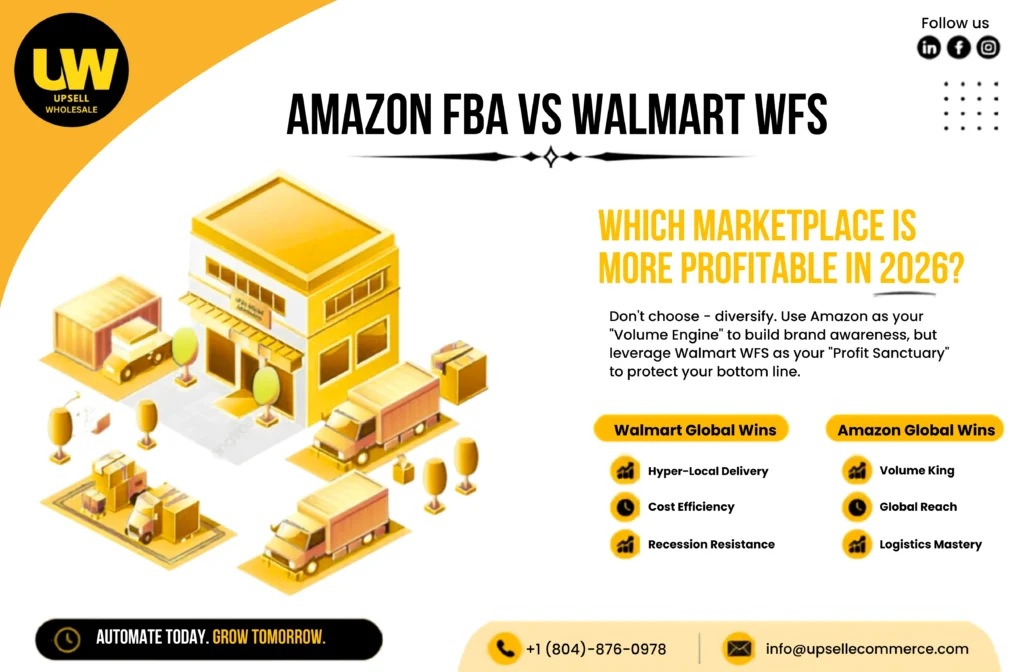
Walmart Fulfillment vs. Amazon FBA: WFS vs. FBA Which is Cheaper?
Many wholesale businesses actively expand by listing on Walmart Marketplace and fulfilling orders via Walmart Fulfillment Services (WFS). When comparing walmart fulfillment vs amazon fba, the category evaluation logic remains consistent: steady demand, post-fee margins, and account eligibility dictate purchasing viability.
For sellers evaluating wfs vs fba which is cheaper for small sellers, WFS frequently provides lower standard-size fulfillment rates, zero inventory placement fees, and less congested Buy Box competition on major brand names. However, Amazon delivers significantly higher organic buyer search traffic. Sourcing dual-channel eligible SKUs through a distributor capable of cross-channel prep allows you to leverage both marketplaces without splitting supply lines.
Dual-Channel Advantage: A supplier that handles both FBA and WFS preparation can save you from splitting your sourcing and prep across vendors.
Which Category Fits Your Business?
These are starting points, not universal rankings.
New Sellers:
Start with Home & Kitchen, which is easy to inspect, store, and match to listings. Consider Pet Supplies only for products where you have verified per-unit profit, and Office Products only when Amazon isn’t already selling the item.
Repeat-Order Seekers:
Health & Household, Pet Supplies, and Beauty & Personal Care.
Limited Storage:
Compact, lightweight products, after checking margins.
Experienced Sellers:
Tools, Baby, and Grocery, where compliance and handling are more demanding.
Category-Selection Scorecard
Score each opportunity from 1 to 5, where higher is more favourable:
| Factor | What to Check |
|---|---|
| Demand | Is demand consistent over a meaningful period? |
| Competition | How many sellers compete, and how does the Buy Box rotate? |
| Profitability | Is there enough profit after all costs? |
| Supplier Access | Can you source at a viable price and reorder reliably? |
| Inventory Risk | Could seasonality, expiry, damage, or slow turnover tie up cash? |
| Scalability | Can you replenish and grow without excessive risk? |
| Eligibility (Gate) | Pass/fail gate: can your account sell this exact ASIN, brand, and variation? |
If you’d like sourcing, ungating support, and FBA/WFS prep from one partner, you can apply for a wholesale account with Upsell Wholesale.
Example: Raising Order Value and Margin
Score each opportunity from 1 to 5, where higher is more favourable:
New Sellers:
Start with Home & Kitchen, which is easy to inspect, store, and match to listings. Consider Pet Supplies only for products where you have verified per-unit profit, and Office Products only when Amazon isn’t already selling the item.
From the Seller Side:
On Amazon, bundle a best-selling brush with waste bags or a deshedding glove. A higher price point raises your average order value and spreads FBA fees across a bigger sale.
Real-World Example: Upsell Wholesale
Upsell Wholesale is a U.S.-based authorised wholesale distributor and Amazon SPN-verified partner that supplies Amazon FBA and Walmart WFS sellers. It combines sourcing with services that usually come from separate providers, which is the kind of bundled value described above.
AMAZON SPN VERIFIED PARTNER
What Sellers Can Get From Upsell Wholesale:
Full-cycle support designed to eliminate friction between inventory sourcing and marketplace check-in.
- Authentic brand-name products from its wholesale catalogue, with supply-chain documentation.
- FBA and WFS preparation and automation services, including labeling, bundling, and shipment coordination.
- Amazon account reinstatement support.
- Ungating support before purchase, so you can check eligibility before spending money.
- Data-backed product analysis and help with product and inventory selection.
- A structured seller course for entrepreneurs wanting step-by-step training (see our ranking of the best Amazon wholesale courses).
Use Wisely:
- Accept volume only on products with proven sell-through.
- Ask suppliers about case-pack pricing, bundle discounts, and shipping incentives up front.
- Confirm that bundling is allowed for the brand and category.
Common Mistakes to Avoid
Buying on estimated sales without checking Buy Box competition.
Ignoring FBA eligibility and restrictions until after you’ve paid.
Skipping a small test order before committing to a large purchase.
Overbuying seasonal stock that locks up cash after peak.
Assuming a high ROI means a product is a good buy without demand.
Forgetting to recalculate fees and landed cost before each reorder.
Where to Find Verified USA Wholesale Suppliers for Amazon FBA
Partnering with reliable usa wholesale suppliers for amazon is the single most critical factor in protecting your account health and securing sustainable margins. To establish yourself as an amazon authorized seller and safeguard your listings against counterfeit claims or inauthenticity warnings, source exclusively from manufacturers or direct authorized distributors.
While directories like Wholesale Central and Thomas can provide initial leads, prioritize suppliers that provide direct commercial invoices, brand authorization letters, and integrated FBA prep. Working with an established distributor like Upsell Wholesale gives you immediate access to authentic brand inventory, automated prep, and pre-order ungating validation.
Final Takeaway
Start with one or two categories that match your budget and experience. Verify suppliers and brand approvals, check eligibility before you buy, and use volume and bundling once you have sales data to back the decision.
If you’d like sourcing, ungating support, and FBA/WFS prep from one partner, you can apply for a wholesale account with Upsell Wholesale.
Frequently Asked Questions
Home & Kitchen is generally the easiest to inspect, store, and match to listings. Pet Supplies and
Office Products can work too, but only with verified per-unit profit and a check on who else is selling
the item.
No, but categories like Beauty and Grocery are often gated and may require brand authorization or
invoices. See how to get ungated in Health &
Beauty.
Visit the Upsell Wholesale FAQ or contact the team.
