

Amazon FBA Wholesale in 2026
Starting an Amazon wholesale business can look simple from the outside: find a product, purchase it from a supplier, send it to Amazon, and wait for sales. In reality, wholesale is a connected business process involving product selection, supplier relationships, selling eligibility, purchasing decisions, profitability, fulfillment, and inventory management.
The right Amazon FBA wholesale course should therefore do more than teach product-finding techniques. It should help sellers understand the complete process, recognize risk before investing, and make informed decisions with real business economics in mind.
Amazon FBA Wholesale: The Business Model
Amazon FBA wholesale involves purchasing established products from legitimate wholesalers, distributors, manufacturers, or brands and reselling those products on Amazon. With Fulfillment by Amazon (FBA), sellers send inventory into Amazon’s fulfillment network, where Amazon handles fulfillment activities such as storage, picking, packing, and shipping.
A typical wholesale workflow moves sequentially through:
Product Research → Supplier Sourcing → Product Analysis → Approval/Ungating → Purchase → FBA → Sales → Inventory Management → Reordering.
Established demand does not automatically make a product a good investment. Fees, competition, supplier pricing, restrictions, returns, and inventory risk can materially change the economics.
The 2026 Wholesale Opportunity
Amazon wholesale can be a viable business model, but it should be approached with realistic expectations. Competition, supplier pricing, Amazon fees, inventory availability, changing demand, and selling restrictions can all affect outcomes.
The objective is not simply to find products that sell. It is to identify opportunities where the complete economics make sense after relevant costs and risks are considered. No legitimate course can guarantee a specific sales or profit level.
Amazon FBA Wholesale Explained (2026 Edition)
Want a quick introduction before going through the complete guide? Watch Arden explain how Amazon FBA wholesale works, from finding wholesale products and suppliers to sending inventory to Amazon FBA.
Amazon FBA Wholesale Workflow
Operating a profitable wholesale business on Amazon requires following a disciplined 6-stage lifecycle. Skipping any of these steps creates financial and operational risks.
Complete Amazon FBA Wholesale Lifecycle Flowchart
Follow this structured process for every product opportunity before committing capital.
- Research
Evaluate demand, competition, and product economics.
- Source
Find legitimate wholesalers, distributors, or brands.
- Verify
Check eligibility, restrictions, and documentation.
- Purchase
Order within a controlled inventory budget.
- FBA
Prepare, label, and send inventory into fulfillment.
- Manage
Monitor sales, inventory, cash flow, and replenishment.
Core Skills Every Amazon Wholesale Seller Needs
1. Seller Central Fundamentals
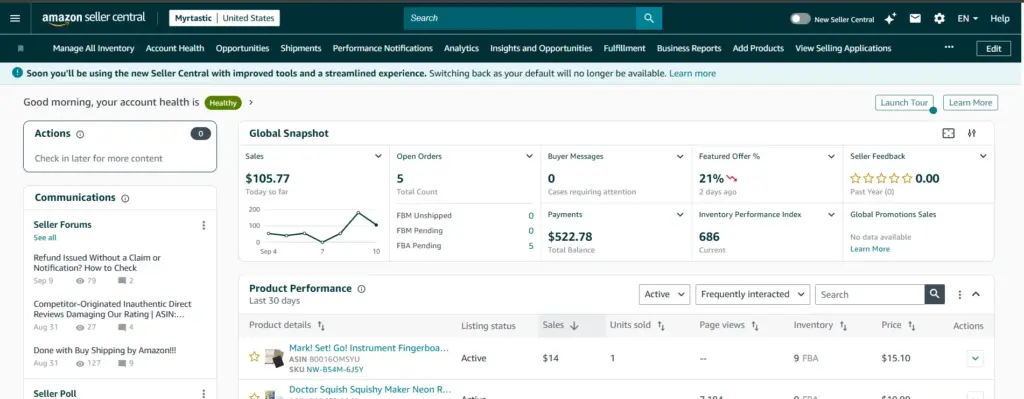
Training should cover the practical areas sellers use to operate their business daily, including product listings, inventory management, orders processing, automated pricing rules, account health metrics, FBA shipment creation, fee structure, performance reports, and seller compliance.
2. Product Research and Opportunity Analysis
Product research is one of the most important wholesale skills because products should be thoroughly evaluated before inventory is purchased. Strong sales volume alone is not enough.
Product Analysis & Keepa Data Inputs
Comprehensive historical charts used to evaluate sales rank, pricing stability, and Buy Box dynamics.
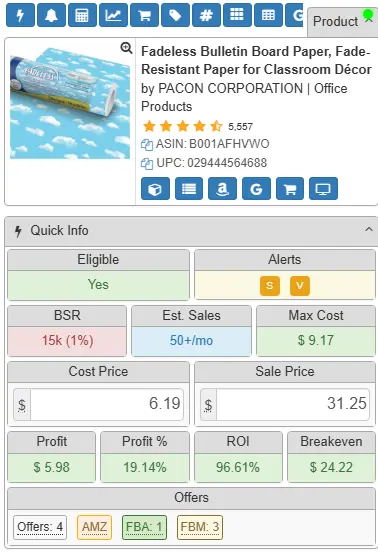
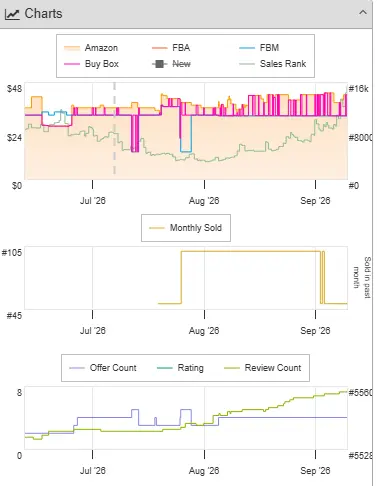
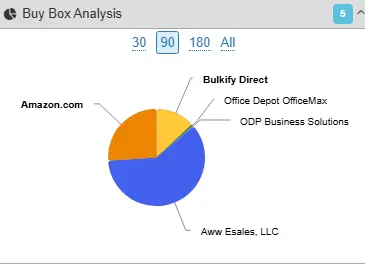
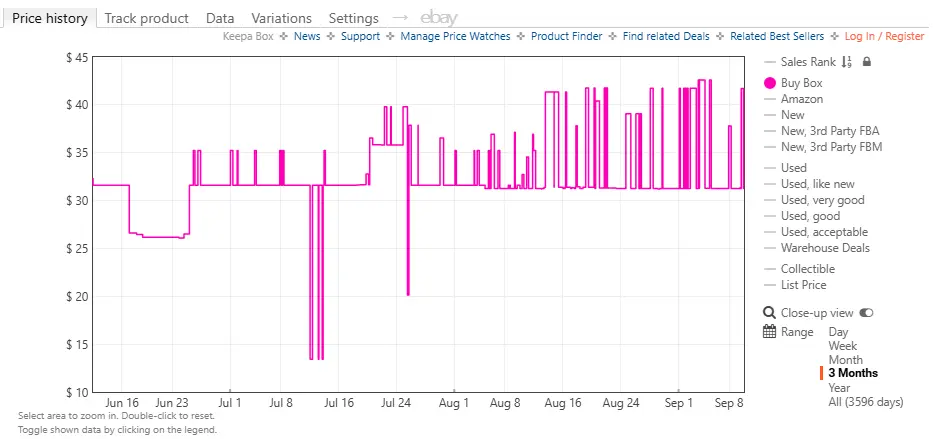
Use the following Product Research Checklist to evaluate every potential ASIN:
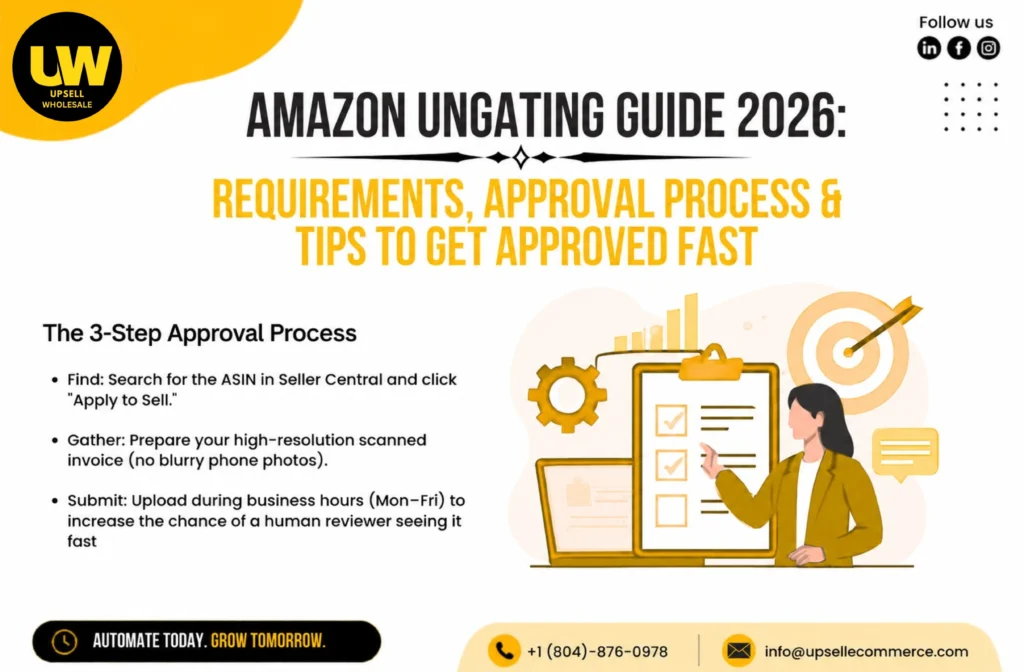
Counterfeit products remain one of the biggest challenges in global eCommerce. Popular brands are frequently targeted because of their high demand and strong brand recognition.
Amazon uses the ungating process to verify that sellers obtain their inventory from legitimate wholesale suppliers or authorized distributors. This additional layer of verification protects both customers and brand owners while helping maintain the integrity of the marketplace.
- Demand
Sales velocity, BSR/sales-rank history, seasonality, estimated monthly sales.
- Competition
Seller count, FBA sellers, seller stability, Buy Box/Featured Offer competition.
- Price Stability
Historical selling price, Buy Box fluctuations, price drops, potential price wars.
- Profitability
Product cost, Amazon fees, inbound shipping/prep, net profit, ROI and margin.
- Amazon Presence
Whether Amazon sells the ASIN and how often Amazon controls the Buy Box.
- Eligibility & Risk
Brand/category/ASIN restrictions, IP complaints, hazmat or compliance issues.
- Replenishment & Supplier
Stock availability, MOQ, supplier reliability, lead time and ability to reorder profitably.
- Inventory & Logistics Risk
Size/weight, storage costs, expiry where applicable, slow-moving inventory risk.
3. Legitimate Wholesale Supplier Sourcing
Supplier sourcing is a core part of the wholesale model. A strong course should teach sellers how to identify, evaluate, and work with reliable suppliers, helping them make better decisions around pricing, documentation, product authenticity, inventory availability, and long-term replenishment.
How to Evaluate a Wholesale Supplier
🏢 Business Legitimacy
Verify the supplier’s company details, physical presence, contact information, and position within the distribution chain.
📜 Brand Authorization
Confirm which brands they are authorized to distribute and whether they can provide supporting documentation when required.
🧾 Invoice Quality
Review whether invoices include complete business details, product information, quantities, dates, and other documentation Amazon may request.
💰 Pricing & Terms
Evaluate wholesale pricing, MOQ, payment terms, shipping costs, lead times, and available volume discounts.
📦 Inventory & Replenishment
Check product availability, restocking frequency, lead times, and whether profitable products can be reordered consistently.
✅ Amazon Compatibility
Determine whether the supplier works with Amazon sellers, understands marketplace requirements, and can support compliant resale documentation.
4. Ungating and Selling Eligibility
Some Amazon categories, brands, or products may have selling restrictions. Sellers should understand how to check eligibility and what documentation may be requested before purchasing significant inventory.
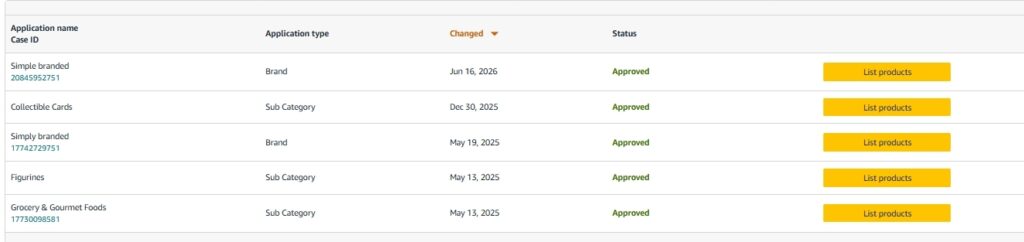
Key Guidelines for Amazon Approval & Ungating
- Identify brand, category, and ASIN-level restrictions.
- Check selling eligibility before placing a purchase order.
- Understand the documents Amazon may request for approval.
- Maintain clear and complete supplier invoices and purchase records.
- Ensure supplier information and invoice details match Amazon’s requirements.
- Follow Amazon’s latest ungating and approval guidelines.
- Avoid purchasing restricted inventory until eligibility has been confirmed.
Note: Amazon makes the final decision on marketplace permissions; no legitimate course can guarantee approval for every seller, brand, or category.
Starting Capital and Purchasing Discipline
There is no universal starting amount for an Amazon wholesale business. Required capital depends on product costs, supplier minimum order quantities (MOQs), shipping, preparation, Amazon fees, inventory strategy, and cash-flow requirements.
For example, if you start with an initial budget of $8,000 to $10,000, your capital allocation should be disciplined:
The Important Rule: Available Capital ≠ Inventory Budget
If you have $7,000 and find 3 good products requiring $6,500 total, buying all three leaves no cash for shipping, fees, or replenishment. A smarter strategy is investing $3,500 across two products, monitoring sales velocity, and keeping reserves ready.
5. Profitability Analysis Before Purchasing
A product can have strong demand and still be a poor investment if the margin disappears after costs. Sellers should calculate the exact unit economics before purchasing inventory.
Amazon FBA Unit Economics Calculator
Unit Economics Inputs
Live Profitability Results
Actual analysis should also consider applicable returns/refunds, storage fees, removal/disposal fees, inbound shipping placement, preparation, and labeling.
6. FBA Shipping and Inventory Operations
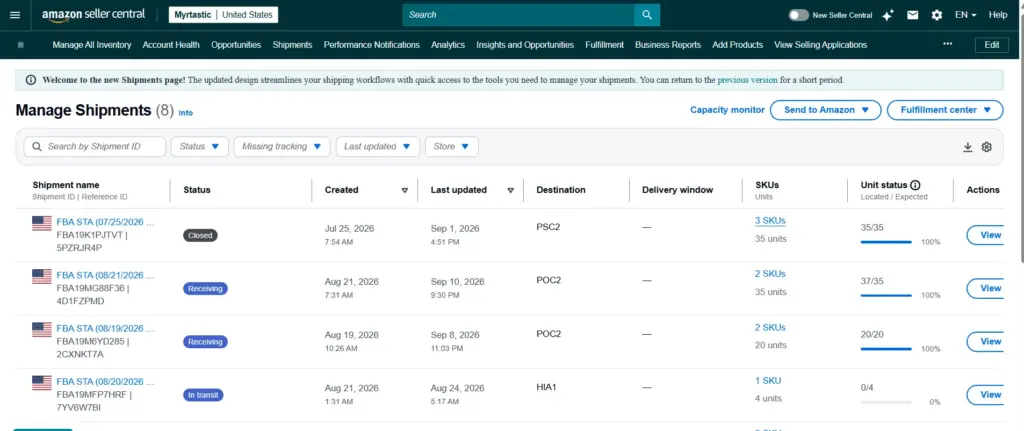
Once inventory is purchased, sellers need to move it into Amazon’s fulfillment network correctly. Operational training should cover product preparation, FN-SKU labeling, shipment creation in Seller Central, master carton packing, carrier tracking, warehouse receiving, and stock monitoring.
7. Inventory Management and Replenishment
Buying inventory is only half the job. Sellers need to decide when to reorder, how much to reorder, when to stop purchasing, and how to handle slow-moving inventory. These decisions should reflect sales data, available cash, supplier lead times, and product economics.
8. Amazon Fees and Total Cost
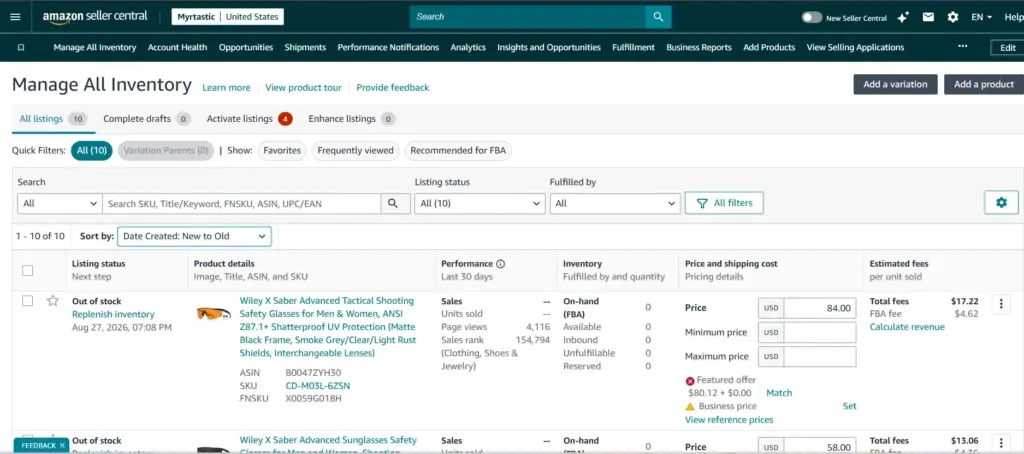
Depending on the product and selling model, costs to account for include:
- Referral Fees
- FBA Fulfillment Fees
- Monthly Storage Fees
- Inbound Placement Costs
- Returns and Refunds Reserve
- Removal or Disposal Fees
- Inbound Shipping Charges
- Wholesale Product Cost
- Preparation and Labeling Costs
The key principle is simple: calculate the complete economics before committing capital.
Common Wholesale Mistakes That Create Unnecessary Risk
⚠️ 1. Buying Before Analyzing Profitability
Strong sales do not automatically mean strong profit margins. Example: You sell a product for $50, but after product cost, Amazon fees, and shipping, you make only $5 profit. 👉 High sales ≠ High profit margins.
⚠️ 3. Ignoring Selling Restrictions
A product is not viable if the seller cannot obtain the required permission to sell it on Amazon.
⚠️ 4. Purchasing Excess Inventory
Large orders can create unnecessary financial exposure before actual marketplace demand is proven.
⚠️ 2. Choosing Questionable Suppliers
Low pricing is not useful if the supplier is unreliable or documentation is inadequate. Example: A supplier offers products at $10, but ships late and provides incomplete invoices. The low price isn’t worth the risk of account suspensions or delays.
⚠️ 5. Focusing Only on Revenue
Revenue reflects total sales, but it does not show how much profit remains after costs and expenses are deducted. Example: You sell 100 units at $20 each = $2,000 Revenue. If costs total $1,200, your actual profit is only $800, not $2,000.
⚠️ 6. Ignoring Amazon's Presence
Amazon competing directly on a listing can materially affect Buy Box share and profit margins.
⚠️ 7. Ignoring Historical Pricing
Today's price does not necessarily represent tomorrow's market during price wars.
⚠️ 8. Failing to Plan Replenishment
A one-time closeout opportunity and a replenishable wholesale brand are very different business models.
⚠️ 9. Ignoring Cash Flow
Money invested in inventory remains tied up until it is converted back into cash through sales. Example: Spending $5,000 on 500 units ties up your liquid capital. That cash cannot pay operating expenses or fund new opportunities until units actually sell.